
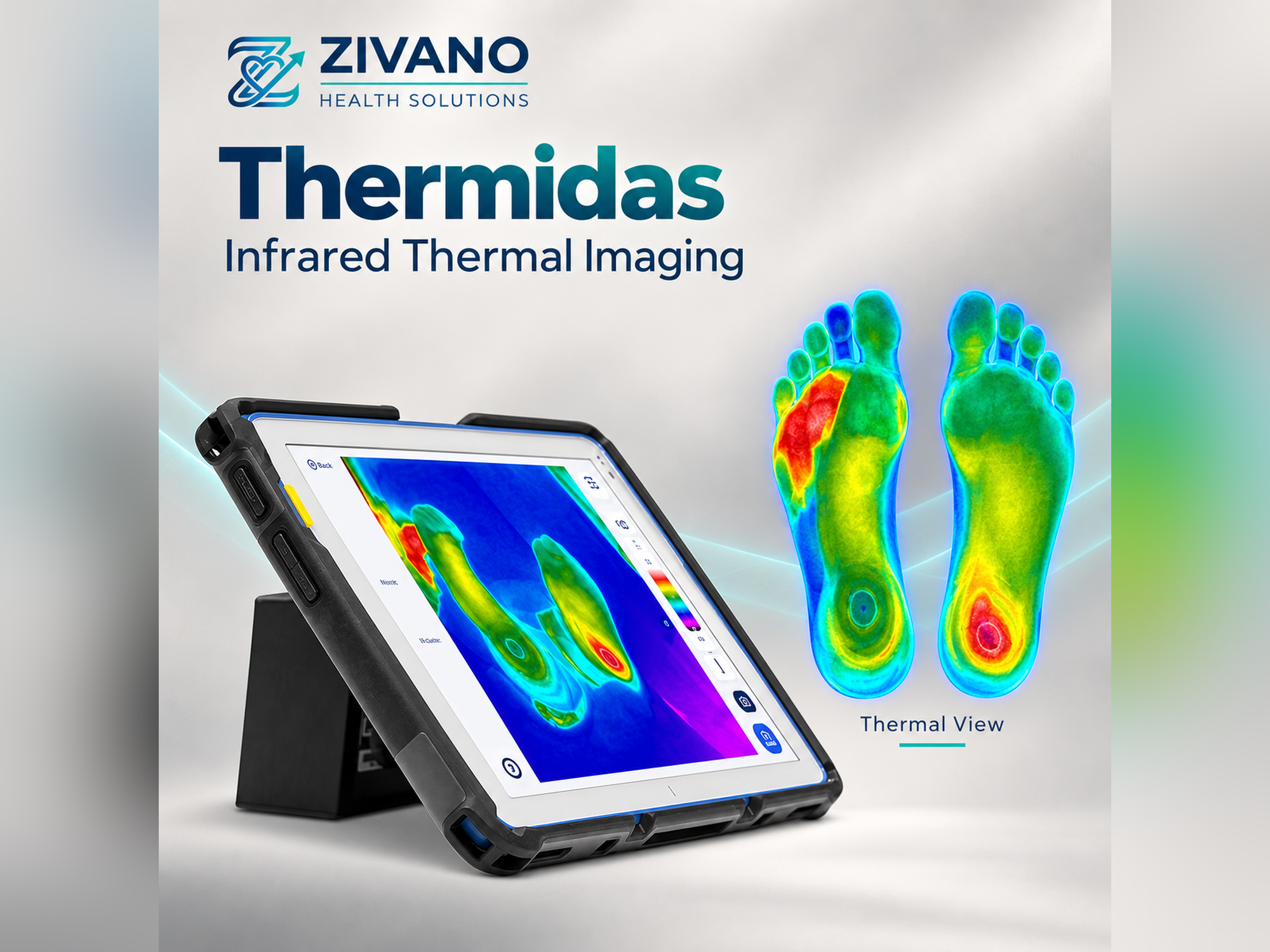
THERMIDAS IRT-384
Non-contact thermal imaging for physiological assessment and recovery monitoring.
Non-contact thermal imaging for physiological assessment and recovery monitoring.
Thermidas maps skin-surface temperature to highlight localised changes and asymmetries across the body. These patterns add physiological context to assessments of musculoskeletal complaints, circulation, and tissue stress, while providing a visual record for treatment and recovery follow-up.
Thermidas IRT-384 — Thermal Camera & VistaClinic Software
A portable thermal imaging system combining a high-resolution infrared camera, a 10.1-inch touchscreen, and integrated VistaClinic software. Capture thermal and visual images, review studies, and organise patient records directly on the tablet.
- Integrated Thermal Imaging Tablet — A 384 × 288-pixel infrared camera and touchscreen bring capture and review into one portable device.
- Simultaneous Thermal & Visual Capture — Records a thermal image and a conventional photograph together.
- VistaClinic Software — Provides on-device tools for image review, study storage, and comparison across assessment dates.

Thermal Insights for Assessment & Follow-Up
Explore the imaging technology, temperature-pattern analysis, clinical applications, and tools for monitoring change over time.
Temperature Patterns in Musculoskeletal Assessment
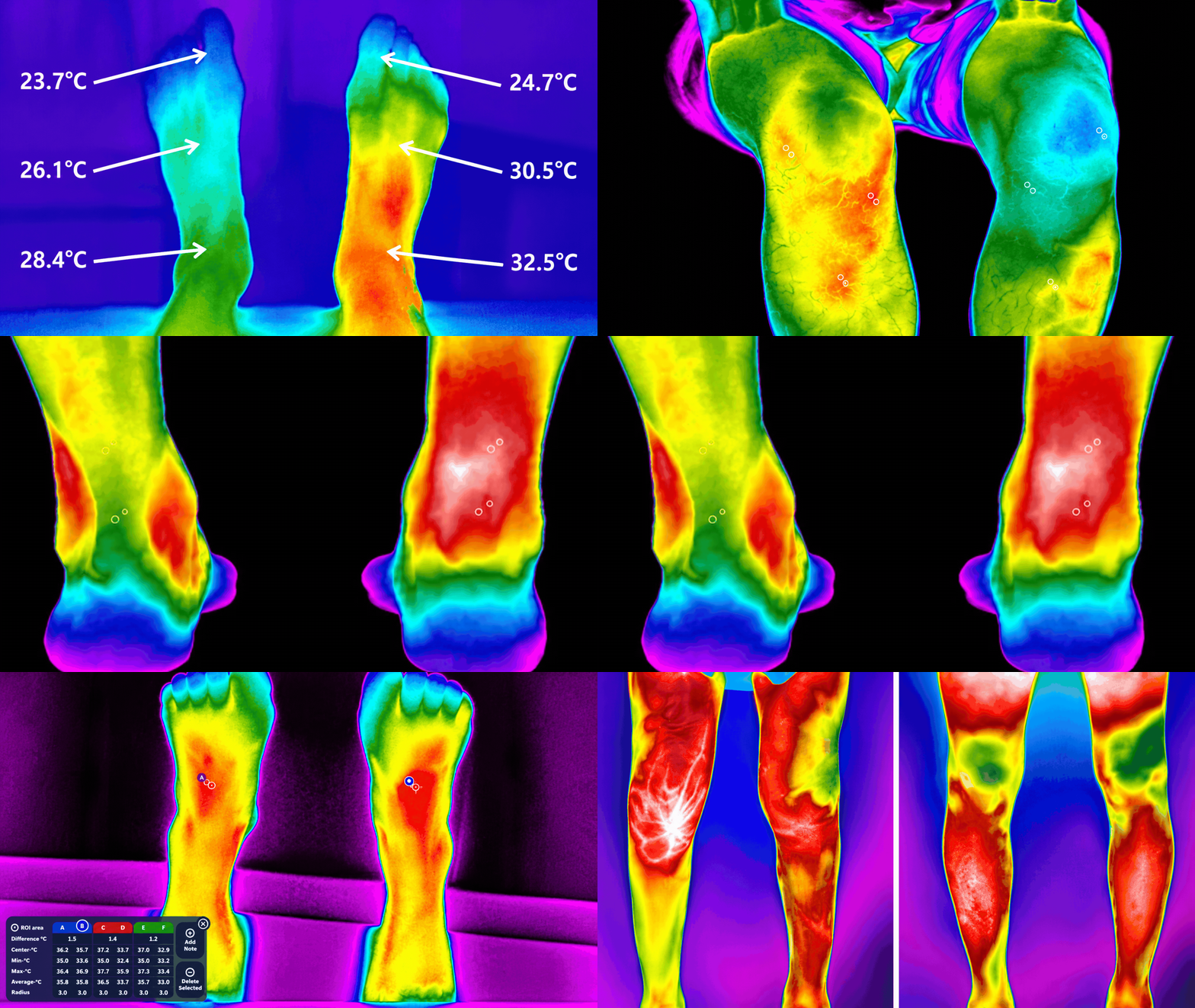
Localised warmth and temperature asymmetry can accompany physiological responses to loading, inflammation, or injury. Thermal imaging helps professionals locate areas for closer examination and document patterns alongside movement testing, symptoms, and clinical findings.
- Muscle & Soft-Tissue Regions — Compares surface temperature over corresponding anatomical areas.
- Tendon & Joint Regions — Highlights localised thermal changes that may accompany inflammatory responses.
- Training & Loading Response — Reviews temperature patterns before and after appropriately timed exercise assessments.
- Side-to-Side Comparison — Identifies thermal asymmetries for interpretation alongside the physical examination.
Circulation, Autonomic Responses & Foot Health
Skin temperature is influenced by blood flow and autonomic regulation. Differences between corresponding regions can provide additional context when assessing peripheral circulation, nerve-related complaints, and foot health.
- Peripheral Circulation Patterns — Maps warmer and cooler regions that may accompany changes in tissue perfusion.
- Autonomic Temperature Asymmetry — Documents patterns that may be relevant to autonomic dysfunction or conditions such as complex regional pain syndrome.
- Diabetic Foot Assessment — Locates hotspots and temperature differences that warrant closer clinical review.
- Pressure & Tissue Stress — Supports assessment of temperature changes around vulnerable skin areas and orthotic contact regions.

Monitor Thermal Changes Through Treatment & Recovery
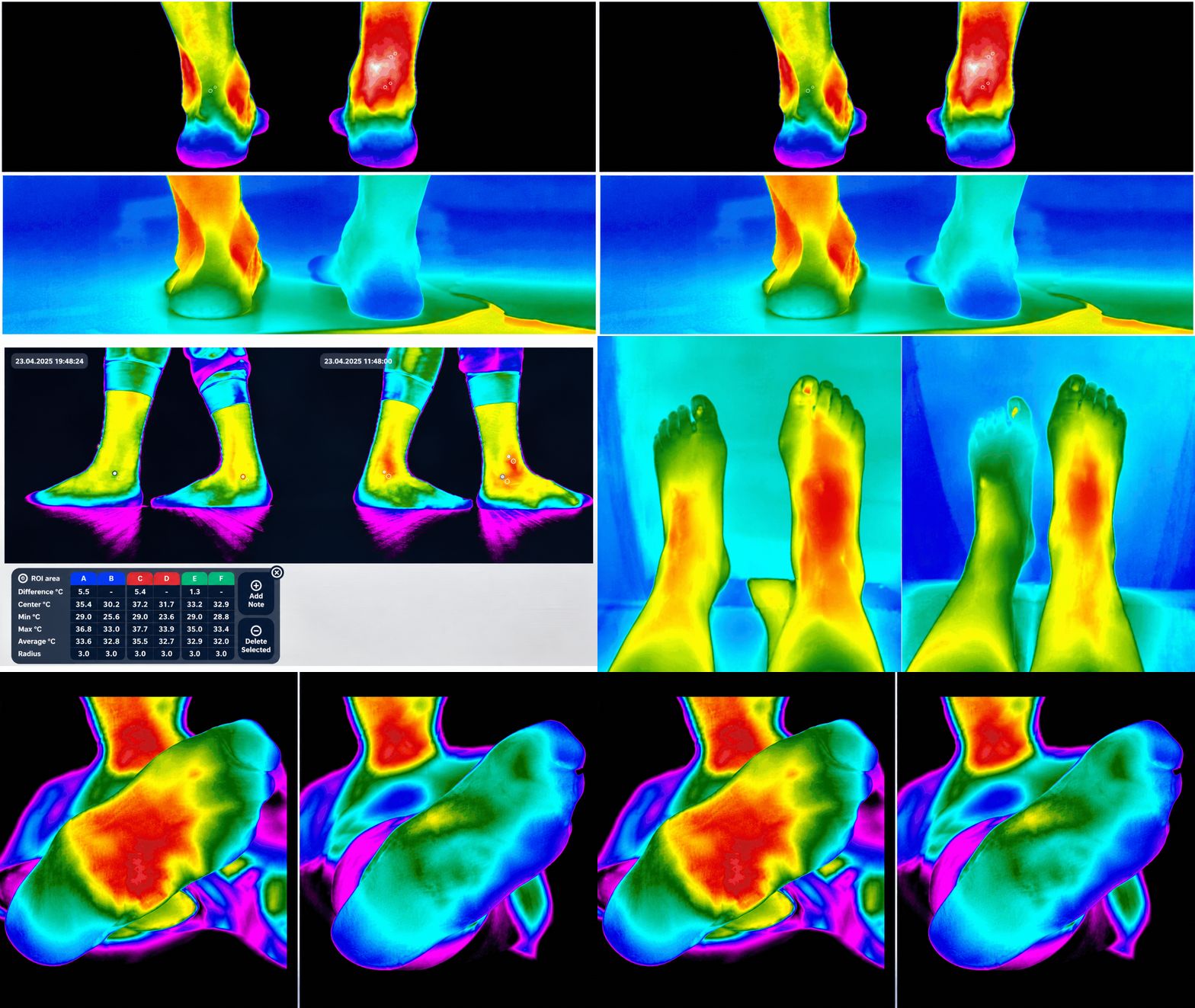
Repeat imaging provides a visual and numerical record of how temperature patterns change over time. Consistent capture conditions help professionals review findings alongside symptoms, function, and the client’s response to treatment.
- Baseline & Follow-Up Comparison — Reviews the same anatomical regions across assessment dates.
- Treatment & Rehabilitation Response — Documents thermal changes following rehabilitation, load adjustment, or orthotic intervention.
- Clear Client Communication — Uses paired images and temperature measurements to explain findings and follow-up priorities.
Non-Invasive Thermal Imaging for Animal Health
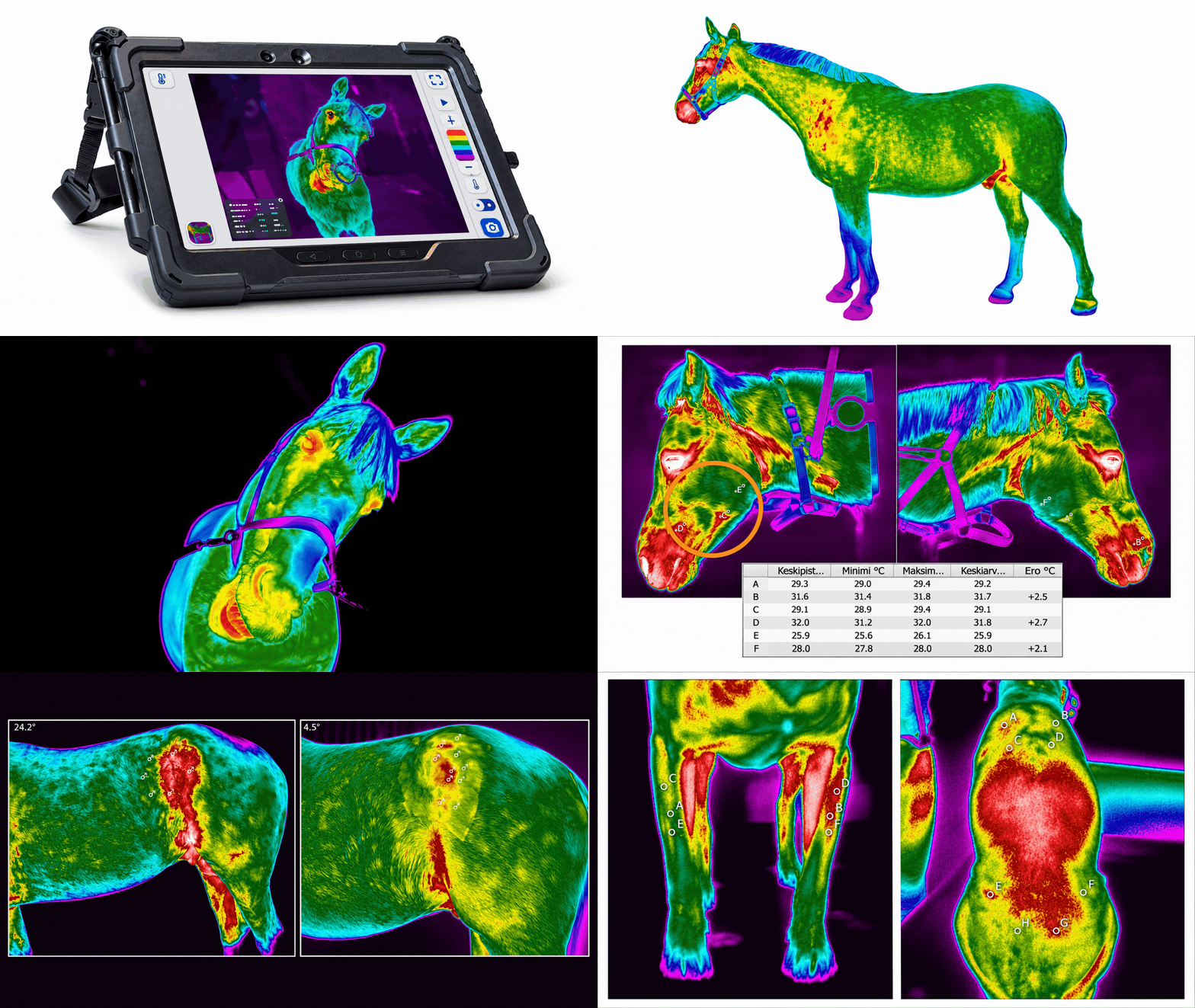
Thermidas VET captures surface temperature patterns to highlight thermal asymmetries and areas requiring closer veterinary examination. Applications span horses, livestock, and companion animals, supporting assessment, treatment follow-up, and recovery monitoring. Diagnostic Thermal Imaging for Animals
- Thermal Pattern Assessment — Compare corresponding body regions to identify temperature differences and localised thermal changes.
- Veterinary Applications — Support examination of musculoskeletal concerns, hoof conditions, and soft-tissue injuries across different species.
- Treatment & Recovery Monitoring — Compare thermal images over time to document changes during treatment and rehabilitation.
Where THERMIDAS IRT-384 Fits Your Service
Designed to fit real operating environments across clinics, hospitals, and performance centers.
Ready for real work.
Zivano can help plan IRT-384 setup, operator training and an appropriate workflow.
Themidas .pdf
Download official product brochure, technical specifications, and clinical workflow guide.
See how THERMIDAS IRT-384 fits your service.
Talk with our team about configuration, demonstration and implementation.